

Stage 1. Aligning goals with needs and contexts
What it's for. Before deciding on methods, it is important to know which conservation, regeneration, well-being, Buen Vivir and prosperity goal you are pursuing. In today's climate, social and geopolitical contexts, and with accelerating access to artificial intelligence systems and data, defining a course of action that takes all these variables into account will be key to achieving effective results.
 What do we want to achieve, why, and who decides?By the end you will have: Goals aligned among partners and a data agreement
What we did in Dzilam
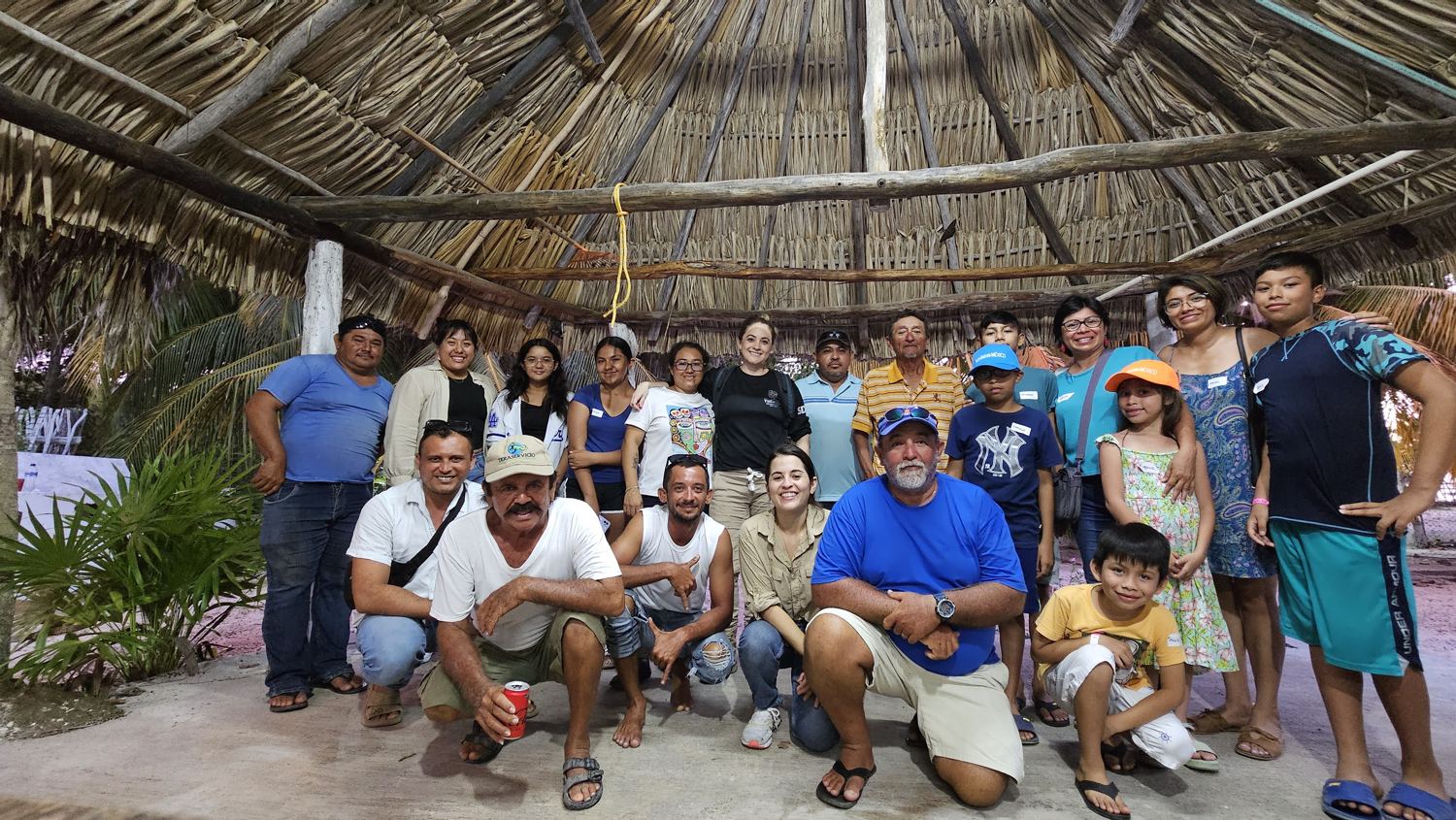
The foundation of these processes is governance. The SDS took part from the design stage, together with the Chac Mool Group and C Minds. Tech4Nature Mexico has a history that predates the project: for a long time, Juan Castillo, along with leaders from the communities of Dzilam de Bravo and Dzilam González, voiced to the authorities their concern about jaguar hunting in the area. When the SDS confirmed the presence of the species, bringing in technology to monitor biodiversity became especially relevant. C Minds came to the table with protocols and courses of action, visibility, data sovereignty and multisector coordination, and the IUCN and Huawei joined to ensure alignment with the Green List and to provide computing capacity, respectively.
It is the spaces for listening, joint work and trust, the combination of different capabilities so that each actor fulfills a role, and the ability to coordinate actions transparently and ensure effective governance that have determined the initiative's success.
Key steps
Listen to the needs of the territory and the institutions: what concerns the community, what the authority needs and what capabilities each partner can bring. In Dzilam, everything began with the community's concern about jaguar hunting.
Build a shared conservation, regeneration and well-being goal with your partners, and name the decisions it will help make, such as a biological corridor or the update of a management program.
Agree on each actor's role: coordination, fieldwork, scientific review, technical support, follow-up and learning. Use the start-up sheet. P1
Define how decisions will be made among peers: spaces for dialogue, meeting frequency, how agreements are recorded and how disagreements are resolved.
With the community's free, prior and informed consent, agree in writing on who owns the data, who can see it, what is published and what is protected. Locations of sensitive species are always protected. P2
Agree on how the work of people from the territory is recognized and compensated, and how benefits are shared.
Lesson learned
In Dzilam, the trust among the community, the state government and C Minds, built from the design stage, allowed the data to become part of a public process. When each actor has a clear role and actions are coordinated transparently, the evidence arrives in time for the decision.
Tools to get started
- Sovereign Data Supply Chain (opens in a new tab) (Kinray Hub, NaturaTech LAC and Climate Collective), the framework that guides our data agreements.
- Principios CREA para la gobernanza de datos indígenas (opens in a new tab) (GIDA, Spanish version of the CARE Principles).
- Buenas prácticas para generalizar datos de especies sensibles (opens in a new tab) (GBIF, in Spanish).
- Recomendación sobre la Ética de la Inteligencia Artificial (opens in a new tab) (UNESCO, in Spanish).
- AI for Environment and Ecosystems Toolkit (opens in a new tab) (UNESCO), for government teams.
- Templates 1 and 2 of this toolkit: start-up sheet and data agreement. P1P2
Criteria 1.1, 1.2 and 1.3 (good governance). Agreements with the community and the authority, assembly minutes and the data agreement are evidence of legitimacy, voice, transparency and accountability. See how to prepare for the Green List.
Puuc Biocultural Reserve, Yucatán
Since 2021, 43 people from four ejidos in Tekax have operated 16 camera traps in the reserve's buffer zone, with support from the SDS, WWF, the Junta Intermunicipal Biocultural del Puuc, CONAFOR and UNDP. They have recorded 36 species of mammals, birds and reptiles with an investment of 96,000 pesos. The case shows that a small project led by ejido members can produce useful information when there is local commitment and alignment with the state's conservation policy.
See case (Regions4 and SDS, in Spanish) (opens in a new tab)